Handmade lingerie making: how a piece comes to life, step by step
Design, pattern making, cutting, sewing, finishing: the stages of making a piece of handmade lingerie, from lace to a piece ready to wear.
By atelier culotté4 min read
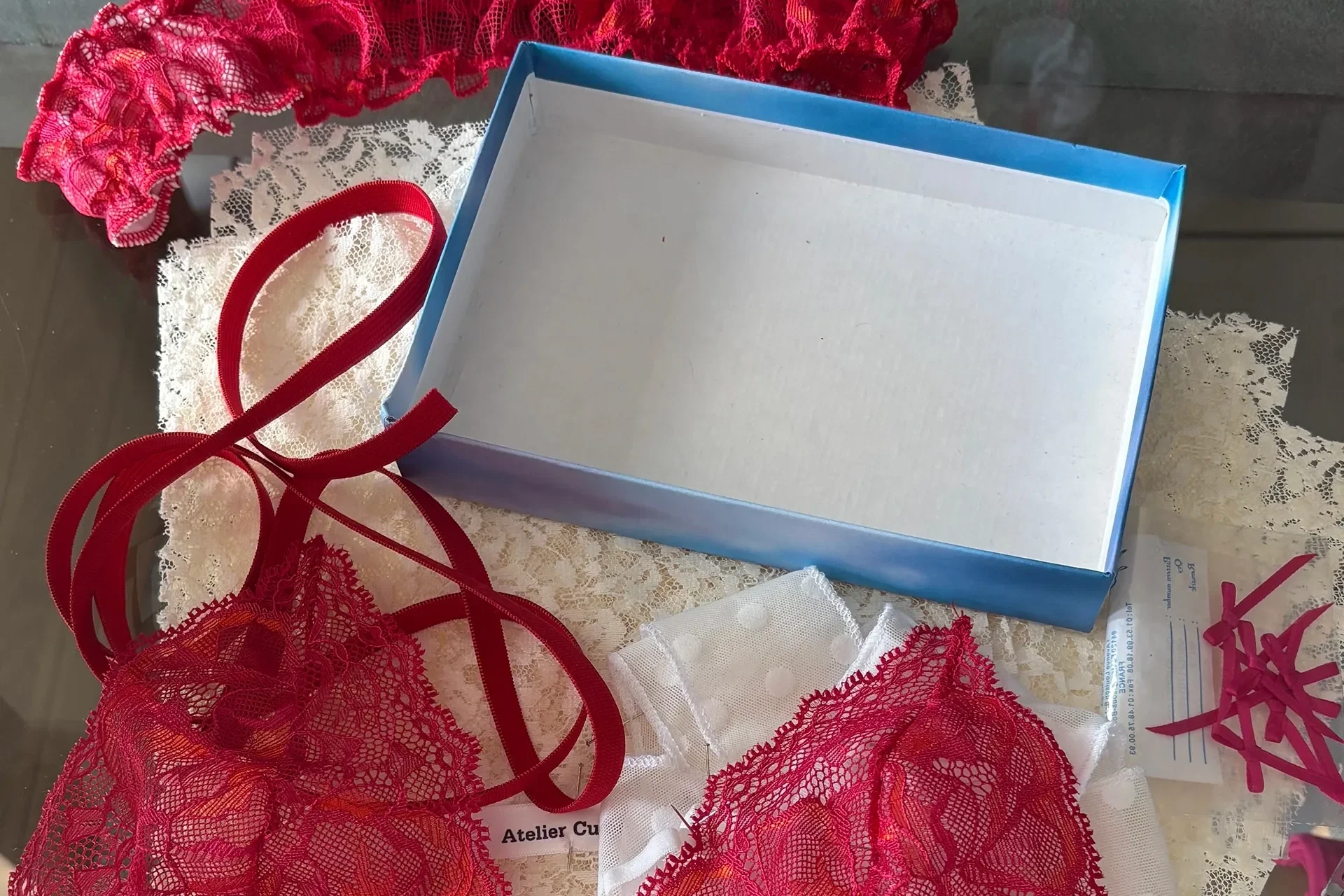
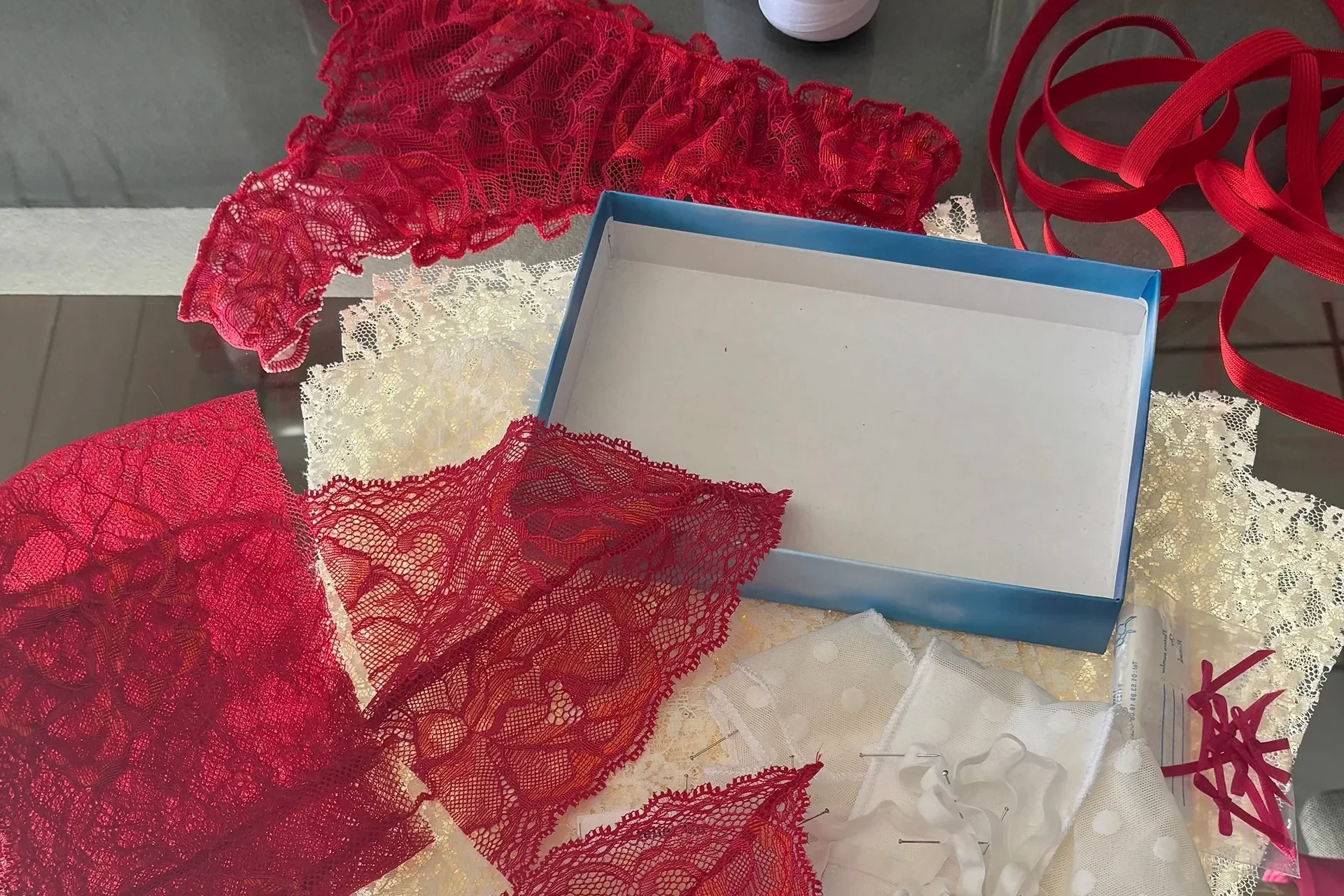
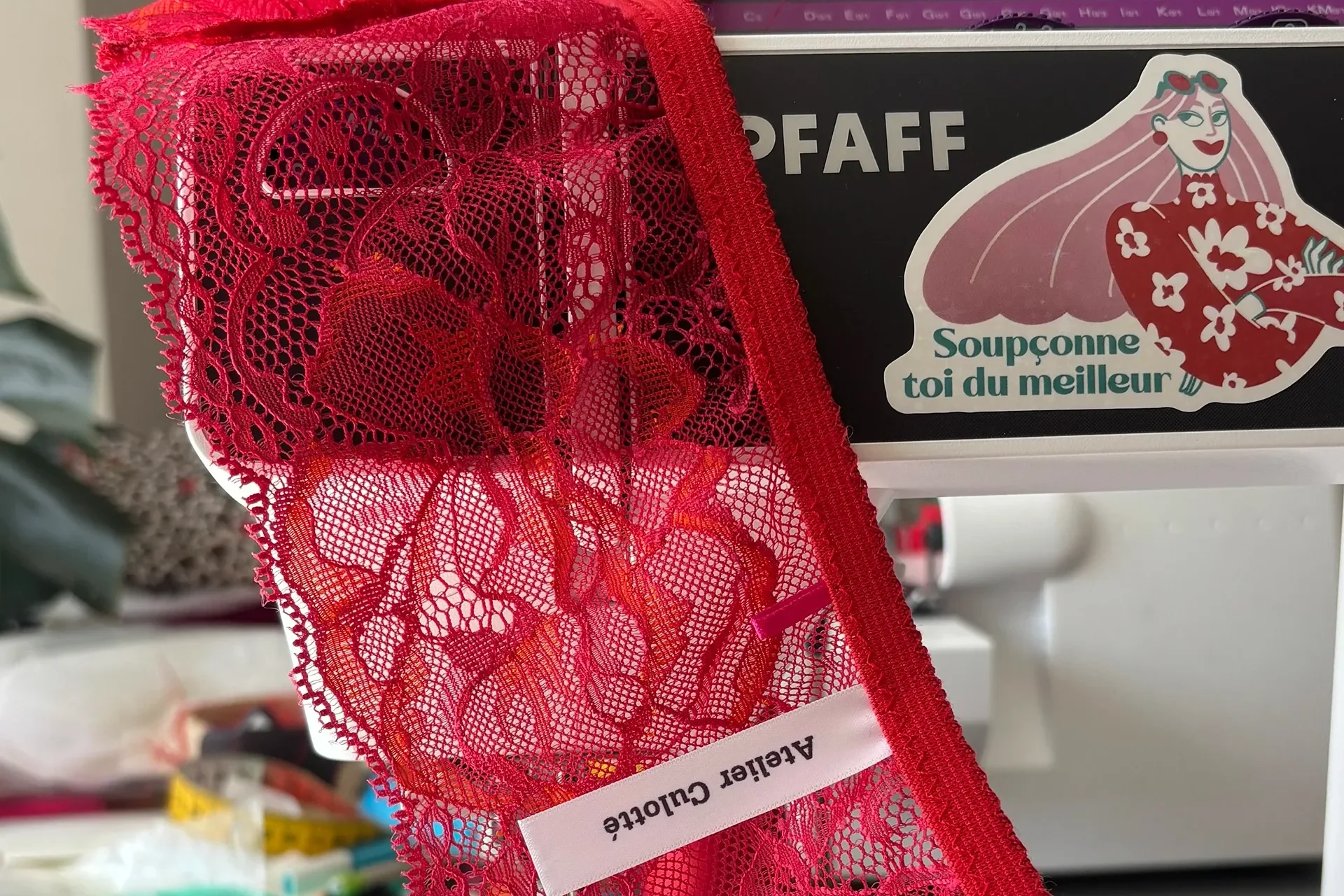
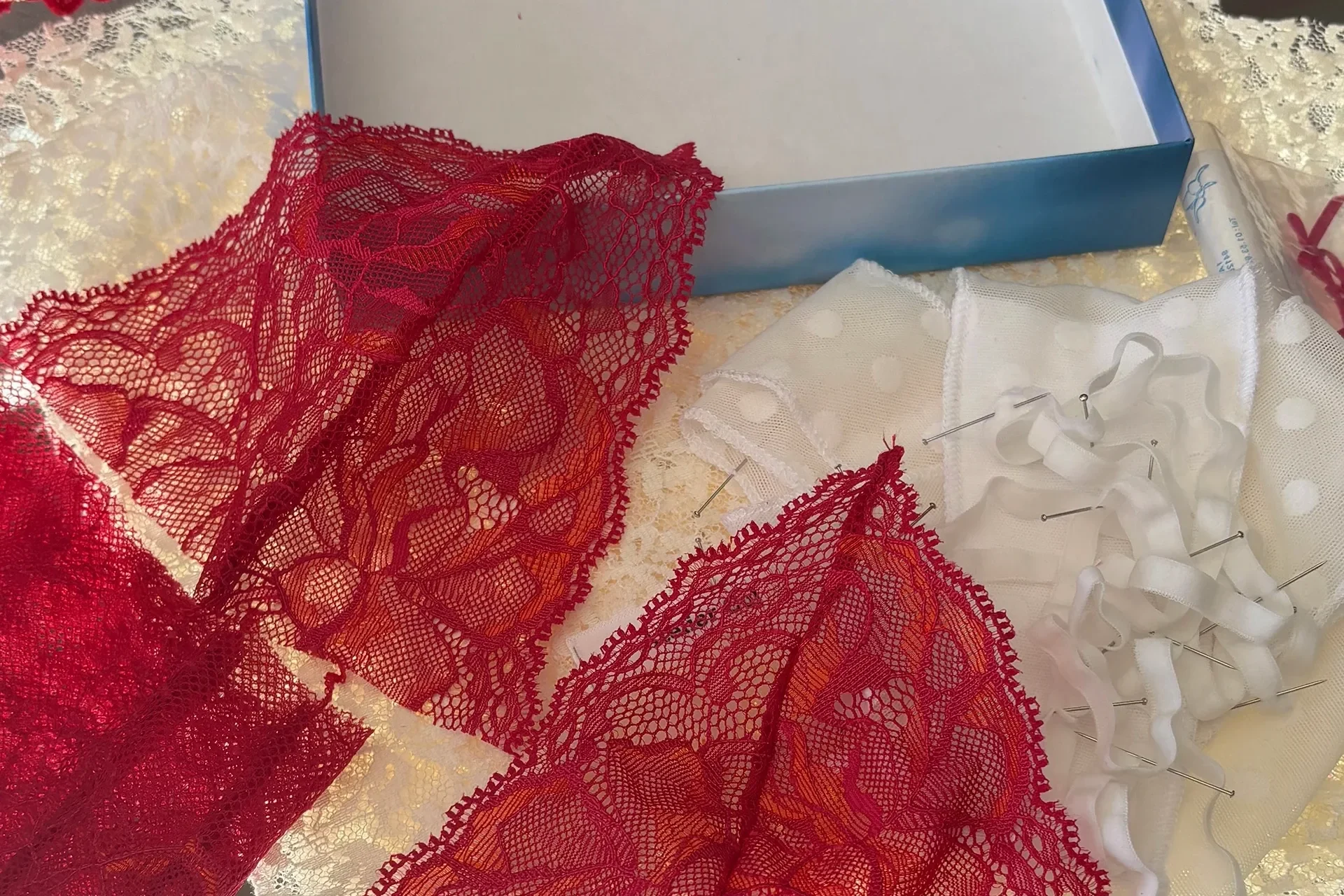
Making handmade lingerie follows five main stages: design, pattern making, cutting, sewing and finishing. At atelier culotté, one person carries them all out, Chloé, in her workshop in Andoins, in the Béarn.
Handmade lingerie making: the main stages
Before going into detail, here is the journey of a piece, from the idea to your door:
- Design: the idea takes shape on paper.
- Pattern making: the design becomes a precise template, graded into each size.
- Cutting: the pieces are cut from the lace, tulle or jersey.
- Sewing: the parts are assembled, with the elastics and the gusset.
- Finishing: jewels, pearls, bows, adjustments, label.
At atelier culotté, each label states how long it took to design the piece: a way of making visible everything that follows.
Design: starting from a wish
It all begins with the idea for a piece: a cut, a fabric, a colour. Sometimes the idea comes from a request. The EXPRESSO bralette is a good example: on its page, the designer explains it is “a new piece I was asked to make to go with the tanga bloomer”. Likewise, the EXPRESSO bloomer briefs came from a request for a more covering version of the tanga bloomer.
The design sets the intention: light support or a covering effect, low-rise or mid-rise, a high-cut back or not. It is also the moment when the spirit of the collection is decided. Chloé puts it this way: “Each design is made to reveal, never to constrain.”
Pattern making: the pattern maker’s craft
Pattern making means translating the design into paper templates, one for each piece of fabric, with the right curves, the right lengths and the seam allowances. It is the heart of the pattern maker’s job, and it is exactly Chloé’s training: she honed her skills with major brands and young French labels before founding atelier culotté.
A pattern does not serve just one size. It is then graded to cover the whole range: most pieces come in S to XL, some bottoms up to XXL, and others in double sizes such as S-M and L-XL. In lingerie, this work calls for great precision, because the pieces sit so close to the body.
Cutting: choosing and placing the fabric
Next comes the cutting. The fabric depends on the collection, and its origin appears on each product page:
- a sheer lace of Turkish origin for EXPRESSO;
- a floral lace from Germany for 50 NUANCES;
- a 100% cotton jersey of European origin for KITTY and GRRR;
- a sheer polka dot tulle for VALENTINE;
- a French fabric for the swimwear.
In lingerie, cutting takes into account the stretch of the fabric and, for lace, where the motif falls on the piece. As each piece is made by hand, slight variations in cut or shade may exist between two copies of the same design.
Sewing: assembling for comfort
Assembly gives the piece its hold. Stretch fabrics are sewn with stitches that follow their elasticity, so that the piece moves with the body. Several comfort elements come into play at this stage:
- The 100% cotton gusset, found on the briefs, thongs and tanga bloomers.
- Decorative elastics, on the 50 NUANCES bralette and briefs or the KITTY and GRRR thongs.
- The lining, on the front of the EXPRESSO draped top or throughout several swimsuits, to avoid any sheerness.
- Adjustments, such as the back fastening with 3 settings on the 50 NUANCES bralette.
The bras and bralettes section shows the variety of possible constructions: triangle, bralette, each with its own level of support.
Finishing: what makes the piece
The finishing touches are often what you notice first. On the workshop’s pieces, they take several forms:
- a jewel or fastening at the centre front of the EXPRESSO bralette;
- jewels at the front of the 50 NUANCES briefs;
- a central stainless steel jewel on the CARMELIA triangle;
- pearlescent beads on the BICHOCO tanga;
- bows at the centre front of the KITTY and GRRR tank tops.
Finally comes the label, with the time it took to design the piece. Before you wear it for the first time, the lingerie pages say it clearly: always wash the product before wearing it.
From the workbench to your door
Once your order is placed, it goes back through the workshop: allow 2 to 5 working days for preparation, then dispatch by tracked Colissimo. That is the pace of small-batch making, which the designer sums up as: “Less quantity, more quality.” To understand this approach better, read Slow fashion lingerie, and to discover the workshop, In the workshop.
Frequently asked questions
How long does it take to make a piece of lingerie?
It depends on the piece. At atelier culotté, each label states how long it took to design the piece you are wearing.
Who makes atelier culotté lingerie?
Chloé, the designer, a pattern maker by profession. She imagines, draws and sews each piece in her workshop in Andoins, near Pau.
Why can two pieces of the same design be different?
Because each piece is made by hand. Slight variations in cut, shade or finish may exist between two copies: they are part of a handmade garment.
Should I wash a new piece before wearing it?
Yes. The lingerie pages recommend always washing the product before wearing it, at 40°C maximum, with no bleach and no tumble dryer.